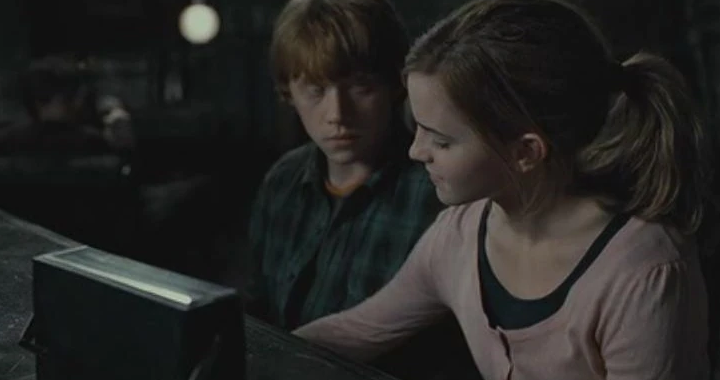
Looking for love, Taavi, Sophie, and Sierra debate with our guest Lillian over the ancient magic of love in the Harry Potter series. We talk about the what the books believe about all the different types of love between the characters and how we interpret the subtext of the messages the book is sending.
In this episode:
- Love in wartime: always worth it? Or never?
- Always marry your high school sweetheart
- Crushes last forever, hear that *NSYNC?!
- The secret to friendships is to never have the same interests
- A mother’s love is everything
- A father’s love… eh
- Romantic relationships cause siblings to fall out
- Does Dumbledore actually love?
- Valentine’s dwarves are vitally important
For more from our guest Lillian:
- Luxalucifer on Instagram
- Potions, Power and Prejudice
Resources:
Pub’s Jukebox: Love Cannot Be Sorted by Ashley Hamel


I really enjoyed the unexpected places the discussion went and that there were some illuminating disagreements. Guest host Lillian was great – I really hope we get to hear more of them (maybe we do? I’m still working my way through the back catalog of episodes).
I wanted to comment on a slight tangent the hosts got on. In particular, on a comment Taavi made about the usefulness of details in fantasy stories like Harry Potter. He cited A Song of Ice and Fire, with all the names and titles, etc., and said, effectively, that such details are “useless” (I can’t recall the exact word he used, but this is close enough).
I’m a little surprised by this perspective, and that no one pushed back at it.
Tolkien, in his seminal essay, ‘On Fairy-Stories,’ beautifully outlines why details are necessary for a fantasy story. I recommend reading the full essay as he goes into many other details on the genre (essentially new at the time; being pried from the idea of being for children), but I’ll point to a few key pieces here.
(Also, this is in no way in defense of Martin’s books – I haven’t read and don’t expect to)
In the essay the Professor talks about the primary world and the secondary world (ie, the fantasy world being created). For stories that take place within our (primary) world he states that it’s relatively easy to reflect the internal consistency of reality. This means, we already know this world and its rules, so the author doesn’t need to go to great lengths to make it feel real.
It’s much harder, he argues, for a fantasy author to make the secondary world feel real and alive and logical. Because to do so, there needs to be brand-new rules and those rules need to be consistent. He gives an example:
“Anyone inheriting the fantastic devise of human language can say ‘the green sun.’ Many can then imagine or picture it but that is not enough…” “To make a secondary world in which a green sun would be credible, commanding secondary belief, would require labor and thought and to command a special skill… and few attempt these difficult tasks. But when they are attempted, and to any degree accomplished, then we have a rare achievement of art. Narrative art. Story-making in its primary and most potent mode.”
Here, the Professor is basically saying, it’s not good enough to create something a reader must suspend their disbelief in order enjoy the story. One must create a “secondary belief.” A world that has rules – an internal consistency of reality. This helps support the active decision to believe in a secondary world which “your mind can enter.” And inside that world, what you read, is true to the laws of that world.
On the flipside, when one has to “suspend” their disbelief (make accounts for why something is the way it is), then a failure has occurred. Disbelief should never enter the scene.
So, these “details” are all part of world building – of creating that secondary world. Rolwing is an odd case because, in my view, she often relied on the suspension of disbelief from her readers. But it’s because of that, a whole fandom thrived, with podcasts dedicated to sussing out meaning, etc., that she herself didn’t do.
Also, I should be clear, I’m not arguing that one must memorize all the names and titles, etc.
Tolkien was of the mind that one didn’t need to “know” all of these details, but felt there were important nevertheless. The reader doesn’t need to know what “dor” means, but since the author does it gives the world depth of meaning. One can enjoy the soup without knowing all of the ingredients. But one will know if a soup sucks if any of the ingredients are off. From his letter 131, “the cycles should be linked to a majestic whole, and yet leave scope for other minds and hands.”
Was all of that overkill? Probably.