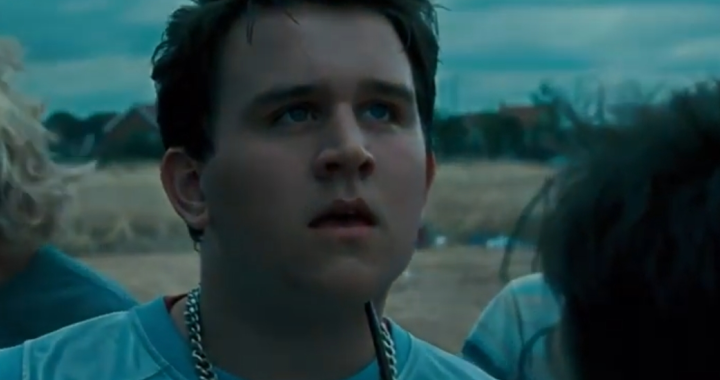
Grab your favourite summer-drink to face the unusal convergence of stuffy weather and dementors at Privet Drive: Join DJ, Karoline, Taavi, and our guest Lane as they discuss Chapter 1 of Harry Potter and the Order of the Phoenix – “Dudley Demented”!
In this episode:
- Everyone is bored…
- The privilege of living like the Dursleys
- Dumbledore is the real villain, or is it Umbridge, or Skeeter?
- Whispers in Fudge’s ear
- Dudley’s greatest piglike fear
- Voldemort’s most boring Privet Drive Dreams
- Petunia and Vernon – the perfect couple <3
- The little horcrux-truffle dementor-pig
- Umbridge is so relatable!
- The duality of cat ladies
Resources:
- Umbridge had one power that no other Harry Potter villians could use by Tom Beasley
- Manipulative/Morally Grey Dumbledore by Wisteria Lodge
- Bloomsbury Web Chat Transcript by The-Leaky-Cauldron.org
For more from our guest Lane:
- lanearoo on Instagram
- shunstanpike on Tumblr
- lanearoo on AO3
- Starside Comic Book Series
- Starside on Instagram
Pub’s Jukebox:

A couple of points. You did not cover the Mark Evans controversy, that was a big deal at the time. Lots of folks thought he had to be a connection with Lily and Petunia somehow, and was going to get his Hogwarts letter soon. (The boy Duddly beat up.)
Then on Mrs Figg, she was mentioned several times in Goblet, including under the name Arabella Figg, as one of the crowd that was to be notifed about the return of Voldemort. So, set up for her return.
It helps to read and reread the books in order, instead of just isolated chapters. My biggest problem with this blog.
Host DJ here.
First and foremost, thank you for taking the time to listen! We appreciate the feedback and hope you did enjoy some parts of our discussion.
I can’t speak for the other hosts, and I am obviously rather new to perma-hosting here, but I did want to just speak to your points re: rereading the books in order as opposed to just isolating chapters. There is of course an argument to do so, but I also think there’s value in revisiting the books in isolated chapters. I know there are things that have been caught on previous episodes that perhaps would not have been if we had just been going through chapter by chapter. Perhaps someday we will do a full-on “reread” of the series in order, we will see where the podcast goes.
Regarding your points on missing some topics. I agree those were missed and could have (and should have) been discussed. At the end of the day, the podcast is just for fun, and I don’t think we ever intend to discuss everything there is to discuss about the Potter series in one fell swoop. Luckily, we have the comments section to help catch those missed topics!
Admittedly, even as a teenager rereading these books constantly, I never once caught the Mark Evans thing. Evans is such a common name I just glazed over it thinking it was a throwaway name myself. I didn’t even hear about this controversy until years later after all the books had come out. While I think it could have been an interesting plot point, I’m ultimately glad it didn’t end up becoming the case that Dudley’s bully-ee joined Harry at Hogwarts. We barely see the Dursleys after this book anyway, and the little bit we do see of them I think is just enough to give Dudley his (brief) redemption. I don’t think we need to ruin it by reminding us he was bullying someone else other than Harry after Harry proved too difficult to bully. As we do discuss in this episode, Dudley is also a child at the end of the day, so I’m glad we don’t have yet another reason to dislike him.
Maybe I’m making this up or confusing it with another episode I was on or maybe it got cut from the final episode, but I do distinctly remember we (briefly) discussed Mrs. Figg being name dropped in Goblet of Fire fairly recently? We recorded this episode several weeks ago and since then have recorded other episodes, so it’s possible I am misremembering. I haven’t listened to the final version. But yes, Mrs. Figg is mentioned in GoF and also in Stone. She still probably came out of left field for many folks given she had no page time in either CoS or PoA, nor did she appear in any of the films except OotP. In the grand scheme of things, a casual reader is still unlikely to pick up on her until OotP especially since Harry (who literally lives next door to her and has for the last 13 years) also doesn’t notice his neighbors name being thrown out as casually as a weather report by his Headmaster. I know we always joke about Harry being unobservant, but maybe it’s actually the reader!
Well, I picked up on 10 year old Mark Evans and Arabella Figg/Mrs Figg the first time I read the books. But I was 45 when I first read Order of the Phoenix. As an adult reader I found the two issues paralleled each other. On the one hand, the name Figg is supposed to ring a bell and the significance be figured out, while on the other hand, the name Evans is supposed to be ignored. I have never known anyone with either last name, do both were equally strange to me. This is one of my favorite chapters in the entire series, combined with the one that follows, and Mrs Figg, the first Wizarding world character I ever cosplayed is a major reason why.
Of course, it is your podcast, to organize as you see fit, but the linkage of some chapters, like those that start off Order, shows a weakness in not going through the books in order. How can ANYONE read chapter 1 and not continue to chapter 2? And the two chapters each reinforce each other. If chapter 2 is discussed months or years from when chapter 1 was, these linkages are going to be difficult to find/ remember.
I hate to see this wonderful opening sequence weakened by taking it apart.
You denounce the nonlinear structure of chapter episodes as a flaw, because the hosts are unlikely to discuss everything worth talking about. This assertion is inherently contradictory, because “everything worth talking about” is subjective. Not everyone may share your view about what is worth discussing and what is not. Furthermore, even if everyone did it would still be difficult to squeeze it all into such a limited amount of time.
You cannot logically make an objective statement for which the only evidence is subjective.
It’s so interesting, in listening to this episode, I realized I had a false memory of what Rowling said Dudley was thinking about when the Dementors attacked. I must have read this theory somewhere and somehow remembered it as coming from the author, so I was actually shocked at hearing the real answer. I had always thought that the trauma Dudley was thinking about was his experiences with magic. And reading the books through this angle, I think there is a ton of evidence for how traumatized Dudley actually is. Harry is thinking of Dudley as never having had anything bad happen to him, but he really has. He’s had a boa constrictor set on him, he’s been given a pig tail that stayed for weeks, he’s seen his aunt blowed up, and he’s eaten a candy that’s made his tongue grow four feet long. Even before his candy experience, he is so traumatized that he’s literally walking around his house with his hands covering his bottom. I think this is actually a beautiful explanation because it shows how blind Harry is to the fact that the fear and bullying between them goes both ways. And it’s also a perfect example of why Muggles really are so scared of wizards: living in a world with wizards means you are completely powerless in your own body. And as for Dudley’s change of heart? I don’t think it’s because of what he saw when the Dementors attacked, I think it’s from learning that Harry was willing to save his life, despite how cruel Dudley has been to him over the years. He saw Harry in a new light and it caused him to reflect.
I like my explanation better than the author’s, but I do think that most people who are bullies (unless they are pure sociopaths) feel twinges of guilt and shame during their bullying that they push down and repress. So it does make sense to me that the Dementors would bring that shame to the surface and force Dudley to look at it, which is something he has been avoiding his whole life.
I agree that it’s more plausible that Dudley relives all his magic-related trauma, but that would have the opposite effect on his character arc: he would double-down on his fear/hatred of Harry rather than re-evaluating him.
I really love the elegance of your theory, but agree with AbsentMindedRaven below – I don’t think Dudley would thank Harry for saving him, he would blame Harry for yet another traumatic incident with magic, and double down. So I think Jo’s explanation does work well.
And to your point about bullies feeling guilt and shame… I don’t know if I’d agree. This may be a better question for folks who’ve researched sociopathy and all (paging Grace!). But my understanding is that, particularly among young people, it takes a while to realize other people are people same as you, rather than NPCs in your life… I think it’d be well within the norm for a fifteen-year-old to not have quite gotten there yet, and this isn’t necessarily indicative of sociopathy. Also why, IIRC, sociopathy is notoriously hard to diagnose in children: they’re all still learning the people-are-people of it all. I think that’s why the dementors showing Dudley how he’s perceived would hit so hard – precisely because he’d never considered that before.
I consider “Dudley Demented” to be such an important transitional chapter. Although we’ve seen almost everything from Harry’s point of view up until this point, there’s a thin but noticeable wall of separation between ourselves and Harry. Rather than letting us into his direct train of thought, the narrator merely reports what Harry is thinking or feeling — and not terribly often. This puts us in “third-person limited” land. Consider the sequence from Hagrid saying in the hut, “‘Do you mean to tell me that this boy knows nothing about ANYTHING?'” And the narrative segue goes, “Harry thought this was going a bit far. He had been to school, after all, and his marks weren’t bad.” And that’s one of the very few times in that monumentally important, life-changing chapter, that we learn anything at all about what Harry is thinking!! (Seriously, give it a reread. It’s less than you think.) There are a few reasons for this, I think, stylistically. With more focus on description and less on the characters, we’re immersed more deeply in the world. And younger kids are simply less in touch with their thoughts and feelings, which I think is reflected somewhat accurately via the gradual increase in internal monologue as the book series progresses.
But it’s not always gradual, and I think this is the essential point. The change in narrative style from the end of book 4 to the beginning of book 5 is extremely stark. Even the graveyard scene and its aftermath, which are obviously some of the most emotionally rending moments in the series, still have a relatively detached tone. But when we arrive back at Privet Drive, we’re thrust very fully and suddenly into Harry’s unfiltered thoughts. His opinions and perspectives are woven into the descriptive paragraphs and narrated as though they are fact, which takes us into the land of “free indirect discourse”. It’s quite jarring when in the first three pages alone (before the action has even taken place) we get lines like this that would have been completely out of place in the previous four books:
And then, of course, it escalates:
We could chalk this up to a decision to have a darker, more serious, more adult tone for the last three books. But I think there’s more to unpack here, because it’s not a permanent change. We get a couple of chapters like this, but then around the time the Advance Guard picks him up, it vanishes! We’re back to third-person limited for quite a while. And amazingly enough, that includes some very difficult and emotional moments for Harry, including his outburst toward Ron and Hermione at Grimmauld Place or his detentions with Umbridge. Yes, we still get more of his thoughts than we ever had in previous books, but we do return to a sort of separation. With remarkably few exceptions, “totally unfiltered Harry” stays away until around Christmas, when his personal crisis around the attack on Arthur Weasley brings free indirect discourse back again. And then it’s gone again for a while. His sixth year barely includes any examples of this narrative style at all.
I believe there are two variables at play here, and I’m curious what you all think. The first variable is the connection with Voldemort. With his maimed soul returned to his body, the indelible bond that had been made between Voldemort’s and Harry’s is reawakened from a semi-slumber. As their souls cannot make direct contact, their souls are instead bound together through a stabler back-channel: the mindlink. Consider this exchange between Dumbledore and Snape:
The narrative shift is both a symbolic and literal representation of the consequences of this new mental connection (with which it precisely coincides in timing — for the first time, he is now having periodic Volde-dreams and scar pain). Symbolically, the reader’s newfound direct access to Harry’s thoughts mirrors the new channel that has sprung up between H + V. Literally, I think Harry becomes much more in tune with his own thoughts and emotions at this moment in time, and we are watching him struggle with that. And yes, it’s really all happening because of puberty and growing up and the end of innocence, etc. etc. But to the extent that Harry is a vehicle for us to process hardships and changes in our own lives, I think the mental bridge with Voldemort is a tangible, in-universe way of showing how being forced to step outside of our own thoughts and be directly exposed to the emotions of others can make us so much more aware of our own thoughts and our own emotions. When that channel is wide open, Harry thinks and feels in ways that he has never thought or felt before. And when that channel is closed (e.g. when Voldemort deploys Occlumency against him throughout Harry’s sixth year), his brain can unclench and he can just let himself be. To me, this is similar to the “ignorance is bliss” concept. If you don’t think too hard about where meat comes from, you can enjoy it. But if you have to constantly experience the agony of a dying chicken, you will probably have much stronger thoughts and feelings about it. Finding balance in this regard is key, and underrated, and extremely difficult. It’s unhealthy to be too obsessive, and it’s unhealthy to be too detached.
Here’s where the second variable comes in!!! Because we still haven’t explained why we’re back in third-person limited land for most of the remainder of year 5. If the channel is open now, and Voldemort isn’t deploying Occlumency yet, why are our jaunts into Harry’s brain so short-lived? And the answer is wonderfully simple. Harry ponders this exact question while he is digging Dobby’s grave: Voldemort’s rage, normally so stark in his mind, is now immensely distant in the wake of Dobby’s death, and Harry now realizes why.
It was love. Love, which surrounded him from the moment that the Order rescued him from the Dursleys. Love, which sustained him during those gut-wrenching weeks under Umbridge’s detentions. When Harry feels this sense of closeness with his friends, or with the Weasleys, or with Hogwarts, he can’t be touched in the same way by his connection with Voldemort. The mindlink is a real test for Harry, because it so effectively exploits the chinks in his sense of closeness, and it gives him time and space to brood and thereby increase his psychological isolation. The more we see Harry’s thoughts, the more he is stuck inside his own head. That’s why we get “totally unfiltered Harry” during times such as the Dudley Demented summer, when he feels like he has been cut off; the following Christmas, when he believes he needs to cut himself off; and his foray into obsession with the Deathly Hallows, when he comes dangerously close to cutting himself loose from his essential goodness and selflessness for a selfish purpose.
But his dabbles with the Dark Side, if that’s how we understand it (which, if left unhindered, may eventually lead to the more concrete Dark Arts) are not only a bad thing. The same way that you or I can go to a very dark place and come out a better and more mature person, I think the same happens to Harry. These moments help him to grow, understand himself, understand Voldemort, and find the strength to do what he must eventually do. A Harry who had never truly felt could perhaps never have walked into the forest to die. But the balance was essential. By taking us along with Harry, the narrator gives us license to feel and to think very deeply while remaining grounded in the love that surrounds so much of the story.